A running toilet, weak flush or leaking flapper does not automatically mean the entire toilet needs to be replaced. If replacement is one of the options, build the full scope with the Toilet Installation Cost Calculator before comparing it with the repair price.
Is it cheaper to fix a toilet or replace it?
Repair is usually cheaper when the problem is limited to a flapper, fill valve, supply line, handle or seal and the porcelain fixture remains sound. Replacement becomes more reasonable when the bowl or tank is cracked, the toilet repeatedly clogs, several parts are failing or installation work is already required.
Identify the failed component
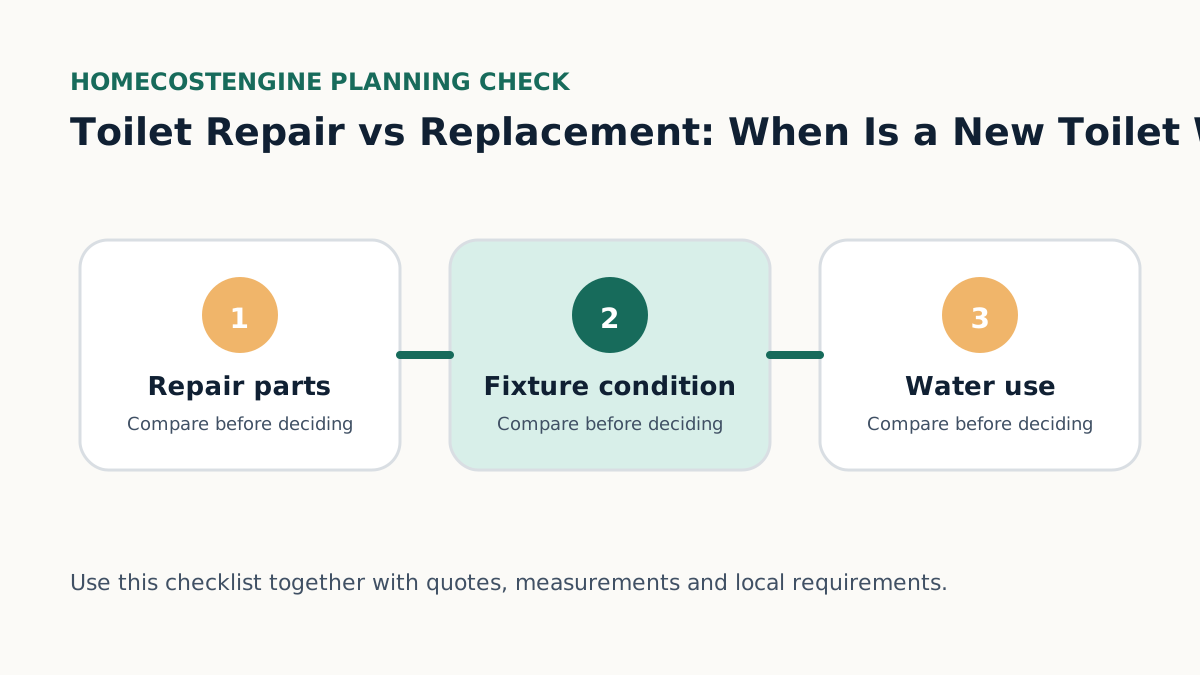
Flappers, fill valves, supply lines and some seals are common service parts. Ask whether the porcelain fixture itself is sound.
Cracks change the decision
A cracked tank or bowl can create leak and safety concerns. Replacement is usually a different discussion from replacing a worn internal valve. When surrounding flooring, vanity or plumbing is also changing, use the Bathroom Remodel Cost Guide to plan the broader scope.
Consider recurring problems
Repeated clogs, unstable mounting, persistent leaks or multiple failing components can make replacement more attractive than one more repair.
Compare water efficiency
If replacement is already needed, compare certified high-efficiency models and flushing performance rather than buying solely on price.
Include installation scope
A replacement quote may include removal, disposal, a new seal, supply connection and flange repair if needed. Clarify what happens if the flange or floor is damaged. The toilet installation cost and scope guide shows how to normalize fixture allowances, disposal and concealed-work exclusions. When you have local prices, use the toilet installation calculator to compare the complete replacement plan with the repair option.
Sources and further reading
Detailed planning notes for Toilet Repair vs Replacement
The sections below expand this guide so you can move from a quick answer to a more complete homeowner planning process. They focus on measurements, scope, quote comparison and the questions that reduce expensive surprises.
Plumbing repair decisions should include risk, access and remaining life
Plumbing costs are affected by more than the price of a fixture or appliance. Access behind walls or floors, shutoff condition, drain or vent work, permits, disposal, code upgrades and water damage can change the final scope. A simple visible repair may be inexpensive, while a hidden leak or aging connection can require diagnostic work before the contractor can price the job confidently.
For repair-versus-replacement decisions, consider age, reliability, recurring service calls, efficiency, availability of parts and the consequences of another failure. Water heaters, toilets and supply components can have very different risk profiles. A lower-cost repair can make sense when the rest of the system is sound, while repeated failures may justify pricing replacement so you can compare the total expected cost instead of making one isolated decision.
Continue with our guides on detecting hidden water leaks and water-heater repair vs replacement. For independent information on water efficiency, see EPA WaterSense; for water-heating efficiency information, review the U.S. Department of Energy water-heating resources.
Compare options on equivalent scope
A fair comparison uses the same project boundaries for both options. Match demolition, preparation, accessories, labor, delivery, permits, cleanup and warranty before deciding that one material or system is cheaper. If one option lasts longer or changes maintenance needs, include that difference in the decision rather than looking only at the first invoice.
List the factors that matter for the property: upfront budget, expected ownership period, appearance, maintenance, repairability, energy use, comfort, resilience and resale considerations. Not every factor deserves the same weight. A homeowner planning to stay for twenty years may reasonably prioritize lifecycle performance differently from someone preparing a property for sale.
Ask contractors to quote the alternatives in writing with product names and clearly defined scope. That reduces the risk of comparing a premium version of one option with an entry-level version of another. When there is no single “best” answer, the useful outcome is a documented trade-off that fits the home, budget and expected use.
A practical way to use this HomeCostEngine guide
Use this article in three passes. First, understand the cost or quantity drivers so you know what information matters. Second, run the related calculator with your own measurements instead of relying on a national average. Third, compare the result with local supplier prices or written contractor proposals. That sequence turns a general online guide into a project-specific planning tool.
Keep a simple project file with measurements, screenshots, product names, quotes and notes from contractor conversations. When a number changes, update the assumption instead of starting from scratch. This is especially useful when bids arrive weeks apart or when one proposal contains a different material, warranty or scope. A documented baseline helps you notice meaningful differences rather than being distracted by the final total alone.
Remember that HomeCostEngine estimates are for budgeting and education. They do not include every local code requirement, permit rule, hidden condition or labor-market difference, and they are not a substitute for a site inspection. For structural, electrical, plumbing, HVAC, roofing or other work where safety and code compliance matter, verify the final plan with qualified local professionals. If a contractor discovers hidden damage after work begins, ask for photos, an explanation and a written change order before approving additional work whenever practical.
Common mistakes that make online estimates less accurate
- Using living area instead of project area. Roof surface, paintable wall area, flooring area and landscape beds can all differ from the home's advertised square footage.
- Comparing incomplete scopes. Demolition, disposal, preparation, permits, delivery and accessories may be included in one quote and excluded from another.
- Ignoring purchase increments. Bags, cartons, bundles, truckloads and supplier minimums can force the real order above the theoretical calculation.
- Assuming one national price fits every location. Labor rates, access, codes, climate and material availability vary across U.S. markets.
- Choosing only on price. Product specification, workmanship, warranty, schedule and clarity of scope can be as important as the lowest total.
Before you approve the project
Recheck the final measurements and confirm who is responsible for permits, site protection, disposal and cleanup. Make sure important materials are identified by product or performance specification rather than a vague category. Review deposit and progress-payment terms, start and completion expectations, warranty language and the process for unexpected conditions. Keep copies of signed documents and receipts.
If the project is still in the research stage, use the related HomeCostEngine calculators and articles linked throughout this page to test more than one scenario. Changing the project size, material or labor assumption can show which inputs have the biggest effect on the budget. That is usually more useful than chasing one “perfect” average price from the internet.