Concrete volume for a 10×10 slab
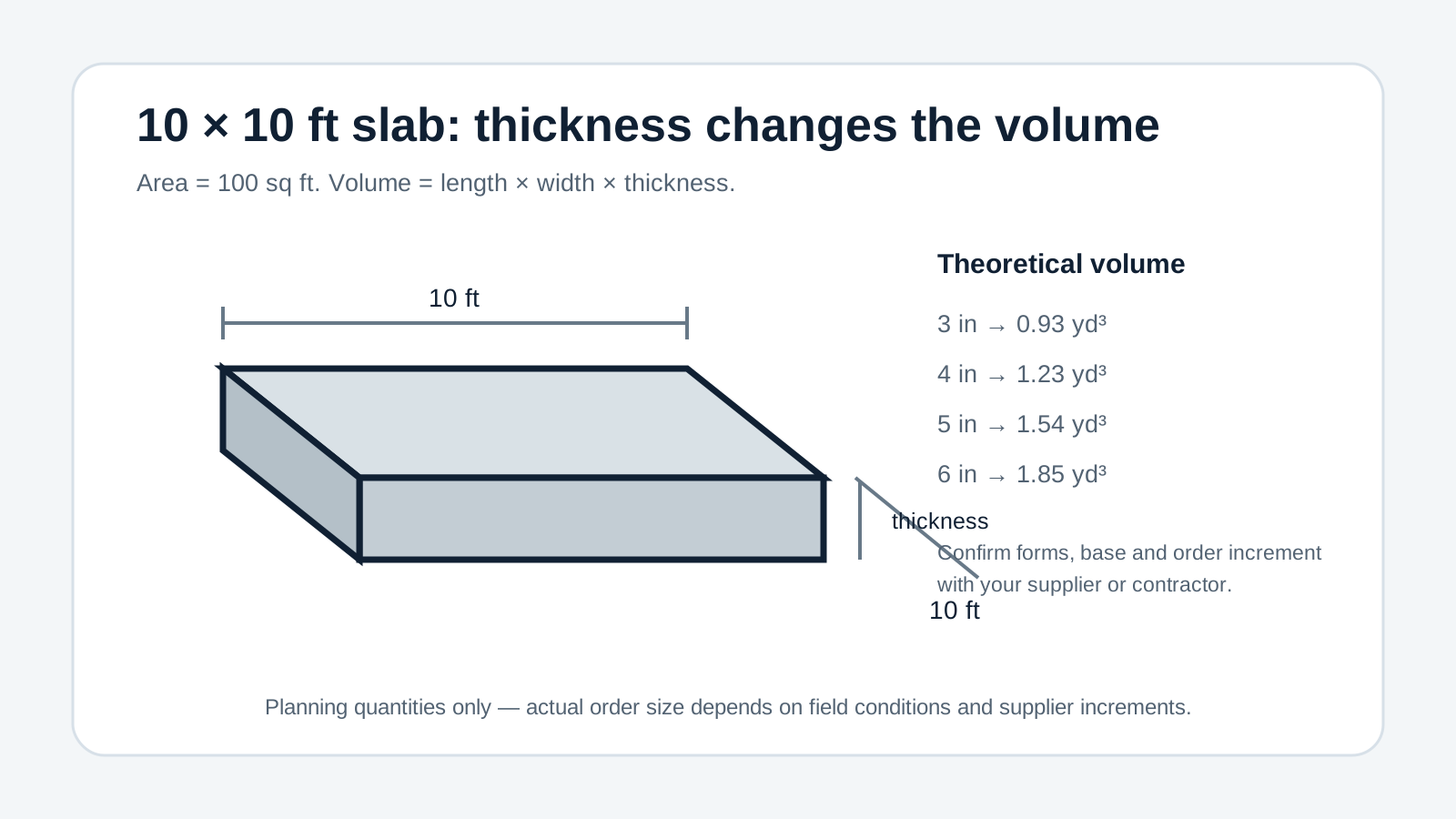
The basic calculation is length × width × thickness. Because thickness is usually entered in inches, convert it to feet before multiplying. Then divide cubic feet by 27 to convert to cubic yards.
| Slab thickness | Theoretical cubic feet | Theoretical cubic yards |
|---|---|---|
| 3 in | 25.0 ft³ | 0.93 yd³ |
| 4 in | 33.3 ft³ | 1.23 yd³ |
| 5 in | 41.7 ft³ | 1.54 yd³ |
| 6 in | 50.0 ft³ | 1.85 yd³ |
These are geometric quantities, not automatic order sizes. Forms can bow, the base may not be perfectly level, excavation can run deep in spots, and suppliers may sell in specific increments.
Worked example: 10×10 slab at 4 inches
A 4-inch thickness equals 4 ÷ 12 = 0.333 feet. Multiply 10 ft × 10 ft × 0.333 ft to get about 33.3 cubic feet. Divide by 27 and the theoretical result is approximately 1.23 cubic yards.
If you were using a hypothetical 10% planning allowance, 1.23 × 1.10 would be about 1.36 cubic yards. Do not treat 10% as a universal rule. The practical allowance should reflect the accuracy of the forms, subgrade, project shape and supplier guidance. Our extra concrete planning guide explains the tradeoff.
How to choose the slab thickness
Do not choose thickness only because one option uses less concrete. Slab use, soil and base conditions, reinforcement, joints, loads and local requirements can affect design. A lightly used walkway and a vehicle-supporting slab do not have the same structural demands.
If the slab is structural, load-bearing, exposed to unusual soil conditions or subject to code requirements, use a qualified professional's design rather than an online quantity estimate.
Ready-mix or bagged concrete?
At roughly 1.2 to 1.9 cubic yards, a 10×10 slab sits in a range where the buying method deserves comparison. Bagged concrete can avoid truck-delivery logistics, but the number of bags and the mixing workload grow quickly. Ready-mix can provide one consistent batch and faster placement, but delivery minimums, short-load fees and access may affect cost.
To estimate bag count, use required cubic feet ÷ the yield printed on the bag. For example, if a specific product label states a yield of 0.60 cubic feet per bag, a 4-inch slab's theoretical 33.3 cubic feet would require about 56 bags before any allowance. Always use the actual yield printed by the manufacturer for the product you plan to buy.
See Ready-Mix Concrete vs Bags for a fuller comparison.
Base preparation can change the real quantity
Concrete quantity assumes the underside of the slab is where you planned it to be. Low spots in the base increase concrete depth. Before ordering, check the form dimensions and several depth points across the pour. Correcting the base can be cheaper and more predictable than filling unexpected depressions with concrete.
Do not forget thickened edges, footings or steps
A simple 10×10 rectangle calculation does not include extra volume for thickened perimeter edges, integral footings, grade beams, steps or ramps. Calculate those shapes separately and add them to the slab volume. The Cubic Yard Calculator can help with additional rectangular volumes.
Ordering checklist
- Measure the inside dimensions of the forms.
- Check planned thickness at several points.
- Calculate any thickened edges or footings separately.
- Decide on an allowance based on field conditions rather than habit.
- Confirm the supplier's minimum order, delivery increment and return policy.
- Make sure access, labor and finishing tools are ready before the truck arrives.
Frequently asked questions
How many yards for a 10×10 slab at 4 inches?
The theoretical volume is about 1.23 cubic yards. The actual order may be higher depending on field conditions and supplier increments.
How many yards for a 10×10 slab at 6 inches?
The theoretical volume is about 1.85 cubic yards before any ordering allowance.
How many 80-lb bags do I need?
Use the yield listed on the exact bag you plan to buy. Divide the required cubic feet by that stated yield, then account for your chosen allowance. Bag yields vary by product, so avoid using one generic count for every mix.
Should I always order 10% extra?
No. Ten percent is a common planning example, not a universal requirement. Form accuracy, base condition, shape, supplier increments and the consequences of running short should guide the final allowance.
Detailed planning notes for How Much Concrete For 10x10 Slab
The sections below expand this guide so you can move from a quick answer to a more complete homeowner planning process. They focus on measurements, scope, quote comparison and the questions that reduce expensive surprises.
Concrete planning: quantity is only the first step
Concrete math looks simple because volume is length × width × thickness, but field conditions make the practical order more complicated. Forms are rarely perfect, the subgrade may vary slightly, some material can be lost during placement, and ready-mix suppliers often have minimums or ordering increments. A small waste allowance is therefore common, but it should be reasonable for the shape and conditions of the project rather than added blindly.
Thickness is a design decision, not just a cost input. A patio, walkway, driveway and structural slab do not carry the same loads or require the same base preparation. Soil, drainage, freeze-thaw exposure, reinforcement, joints and local code can all affect the final design. The cost of the concrete itself is also only part of the installed project. Excavation, base material, forming, reinforcement, pumping, short-load charges, finishing, curing, access and demolition can materially change the total.
Before ordering, convert your measurements with the Concrete Calculator or Cubic Yard Calculator. For larger pours, confirm the quantity, mix and delivery plan with the supplier or contractor. Technical information from the American Concrete Institute and the National Ready Mixed Concrete Association can help homeowners understand why mix design, placement and curing matter.
Measure twice before you order material
Quantity errors usually come from the inputs, not the formula. Recheck length, width, depth, pitch or surface area and make sure every measurement uses the same unit. For irregular projects, break the area into simple rectangles, triangles or other manageable shapes, calculate them separately, then add the results. This is usually more reliable than forcing a complicated space into one rough measurement.
After calculating the theoretical quantity, think about waste and purchase increments. Cuts, breakage, compaction, spillage, pattern matching and packaging can create a gap between calculated quantity and what you actually need to buy. The correct allowance depends on the material and project. Avoid adding a large arbitrary percentage “just in case”; instead, use supplier packaging, installation guidance and the shape of the project to choose a sensible buffer.
Finally, confirm the order with the supplier or installer when mistakes would be expensive. Ask how the product is sold, whether quantities are rounded, whether there is a minimum order and how returns are handled. Save your measurements and calculation so you can explain the order later and compare it with the contractor's takeoff.
A practical way to use this HomeCostEngine guide
Use this article in three passes. First, understand the cost or quantity drivers so you know what information matters. Second, run the related calculator with your own measurements instead of relying on a national average. Third, compare the result with local supplier prices or written contractor proposals. That sequence turns a general online guide into a project-specific planning tool.
Keep a simple project file with measurements, screenshots, product names, quotes and notes from contractor conversations. When a number changes, update the assumption instead of starting from scratch. This is especially useful when bids arrive weeks apart or when one proposal contains a different material, warranty or scope. A documented baseline helps you notice meaningful differences rather than being distracted by the final total alone.
Remember that HomeCostEngine estimates are for budgeting and education. They do not include every local code requirement, permit rule, hidden condition or labor-market difference, and they are not a substitute for a site inspection. For structural, electrical, plumbing, HVAC, roofing or other work where safety and code compliance matter, verify the final plan with qualified local professionals. If a contractor discovers hidden damage after work begins, ask for photos, an explanation and a written change order before approving additional work whenever practical.
Common mistakes that make online estimates less accurate
- Using living area instead of project area. Roof surface, paintable wall area, flooring area and landscape beds can all differ from the home's advertised square footage.
- Comparing incomplete scopes. Demolition, disposal, preparation, permits, delivery and accessories may be included in one quote and excluded from another.
- Ignoring purchase increments. Bags, cartons, bundles, truckloads and supplier minimums can force the real order above the theoretical calculation.
- Assuming one national price fits every location. Labor rates, access, codes, climate and material availability vary across U.S. markets.
- Choosing only on price. Product specification, workmanship, warranty, schedule and clarity of scope can be as important as the lowest total.
Before you approve the project
Recheck the final measurements and confirm who is responsible for permits, site protection, disposal and cleanup. Make sure important materials are identified by product or performance specification rather than a vague category. Review deposit and progress-payment terms, start and completion expectations, warranty language and the process for unexpected conditions. Keep copies of signed documents and receipts.
If the project is still in the research stage, use the related HomeCostEngine calculators and articles linked throughout this page to test more than one scenario. Changing the project size, material or labor assumption can show which inputs have the biggest effect on the budget. That is usually more useful than chasing one “perfect” average price from the internet.