The useful question is not simply “How much is the repair?” It is whether the repair restores a dependable system or only postpones another expensive failure.
Start with the exact failure
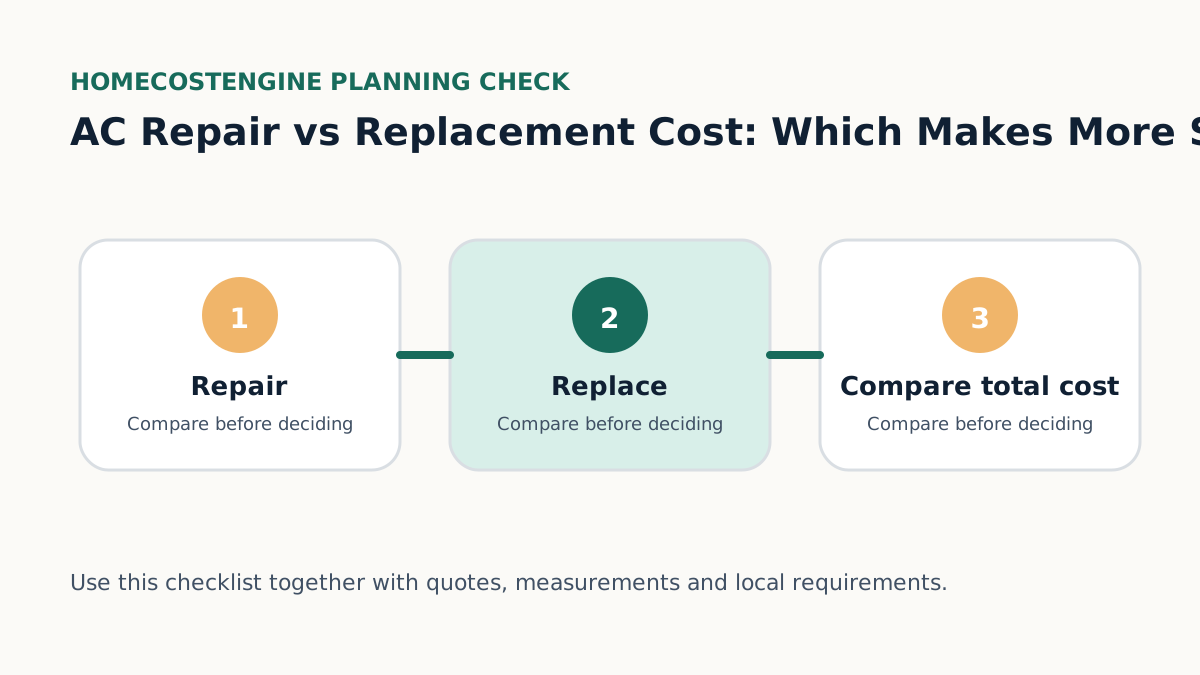
Ask the technician to identify the failed component, the cause of the failure, what else was tested and what warranty applies to the repair. A clear diagnosis is more useful than a vague recommendation to replace the whole system.
Compare the repair with a replacement range
Use the HVAC Replacement Cost Calculator to establish a full-system planning range. That gives the repair quote context without assuming replacement is automatically better.
Look at repair history and comfort
A single repair on an otherwise reliable system is different from several service calls in a short period. Uneven temperatures, humidity problems and noise may also point to broader equipment, duct or sizing issues.
Efficiency is only one factor
A newer system may use less energy, but purchase price, climate, usage, duct condition and how long you expect to stay in the home all affect the economics.
Get a second opinion for expensive decisions
For major repairs or replacement recommendations, compare findings from another qualified HVAC contractor and make sure both proposals describe the same scope.